


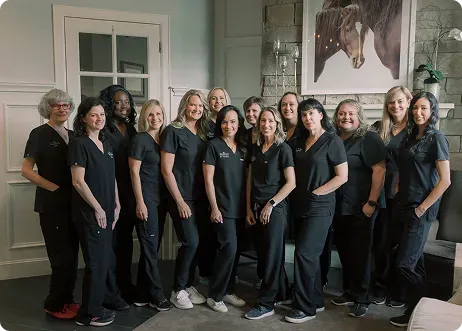
When you sit down in a dental chair, you are trusting a group of people with something personal: your health, your comfort, and often a little bit of nervousness. That trust is not something we take lightly at River Place Dental. Behind every cleaning, filling, and consultation is a team that has spent hours in continuing education courses, hands-on workshops, and certification programs long after dental school or hygiene school ended.
Dentistry does not stand still. New materials, new imaging technology, and new research on everything from gum disease to sleep apnea come out every year. A practice that stops learning starts to fall behind, and patients are the ones who feel it, whether through outdated techniques, longer recovery times, or missed diagnoses. That is why ongoing education is built into how our Austin team operates, not treated as an occasional add-on.
This article pulls back the curtain on what "advanced training" actually means in a dental office: what our clinicians study, why it matters for your treatment, and how it translates into a calmer, safer, more predictable experience every time you visit.
In This Article
- Why Continuing Education Changes the Quality of Your Care
- Where Our Team Concentrates Its Advanced Training
- Learning New Technology Before It Reaches the Treatment Room
- It Is Not Just the Dentists: Training Across the Whole Team
- What This Means for You During Your Next Appointment
- Frequently Asked Questions
Why Continuing Education Changes the Quality of Your Care
Every licensed dentist and hygienist in Texas is required to complete a certain number of continuing education hours each year just to keep their license active. That baseline exists for a reason: dental science evolves, and clinicians need a mechanism to stay current. But at River Place Dental, we treat that requirement as a floor, not a ceiling. Our clinicians regularly pursue training well beyond what is mandated, because the gap between "meeting the minimum" and "practicing at a high level" is where real differences in patient outcomes show up.
Advanced training affects decisions you may never notice directly, such as how a dentist selects the right bonding material for a chip, how a hygienist reads early signs of periodontal disease before it progresses, or how a clinician manages anxiety for a patient who has avoided the dentist for years. These are not flashy skills, but they shape whether your treatment goes smoothly the first time or needs to be redone later.
Patients also benefit indirectly through better communication. Clinicians who stay current with research tend to explain things more clearly, because they understand not just the "what" of a recommendation but the "why" behind it. If you have ever left an appointment with a clear answer to a question you had been wondering about for months, that clarity usually traces back to someone on the team who took the time to study it.
Where Our Team Concentrates Its Advanced Training
Not every course is relevant to every patient, which is why our team divides its continuing education across several focus areas based on the needs we see most often in Austin families. Some clinicians pursue deeper study in restorative work, while others concentrate on prevention, sedation management, or care for patients with complex medical histories.
-
Restorative and cosmetic techniques: Courses on bonding materials, crown and bridge design, and modern cosmetic approaches help our team deliver results that look natural and hold up over years, not just months.
-
Periodontal and preventive care: Hygienists complete specialized training in early gum disease detection and non-surgical treatment, which helps patients avoid more invasive procedures later.
-
Medically complex patients: Training on how conditions like diabetes, heart disease, or pregnancy interact with dental treatment allows us to adjust care plans safely.
-
Patient comfort and sedation protocols: Continuing education in anxiety management and sedation dentistry gives our team more tools to keep nervous patients relaxed and safe.
If you are curious about how these areas apply to a specific concern, our dental services page breaks down treatments in more detail, and our clinicians are always happy to walk through which training informs your particular care plan.
Learning New Technology Before It Reaches the Treatment Room
New dental equipment does not get installed and used the next day. Before a piece of technology, whether it is digital imaging software, an intraoral scanner, or a new sterilization system, ever touches a patient, our clinicians go through manufacturer-led training, hands-on practice sessions, and competency checks. This process can take weeks, and it is intentional: a tool is only as good as the person operating it.
Digital X-ray systems, for example, require training not just on operating the machine but on interpreting the images correctly and understanding appropriate radiation safety protocols. The same goes for digital scanning technology used for crowns, aligners, or retainers, where precision in the scan directly affects how well the final restoration fits.
For patients, this translates into faster appointments, fewer retakes, and more accurate diagnoses. A well-trained team using modern equipment can often spot a developing issue, such as a small cavity between teeth, long before it becomes painful or requires a larger procedure.
It Is Not Just the Dentists: Training Across the Whole Team
When people think about dental training, they usually picture the dentist. In practice, though, the quality of your visit depends on everyone you interact with, from the front desk coordinator who verifies your insurance to the dental assistant preparing the room before your procedure.
Dental assistants pursue certification in areas like radiography, infection control, and chairside procedures. Hygienists complete coursework specific to periodontal therapy and patient education. Even administrative staff receive training on insurance coding and communication, which reduces billing errors and confusion before they ever become a headache for you.
We think of this as a shared responsibility. A well-trained clinician working alongside an undertrained support staff still creates friction points for patients, whether that shows up as scheduling mix-ups or incomplete paperwork. You can learn more about the people who make up our practice on our team page, and read more about the clinicians leading treatment decisions on our doctors page.
What This Means for You During Your Next Appointment
It is reasonable to wonder whether any of this abstract "training" talk actually changes your experience in the chair. It does, in a few concrete ways. First, treatment plans tend to be more conservative and better explained, because clinicians who understand the full range of options are less likely to default to the most invasive one out of habit.
Second, appointments often run more efficiently. A team that is comfortable with current technology and updated clinical protocols spends less time troubleshooting and more time focused on you. Third, and maybe most importantly for anxious patients, a well-trained team tends to be better at reading nonverbal cues and adjusting pace, pressure, or conversation accordingly.
If you have questions about insurance coverage for any recommended treatment, our insurance information page outlines what we accept and how coverage typically works, so there are fewer surprises once a plan is in place.
Key Takeaways
- Advanced training goes well beyond Texas's minimum continuing education requirements for licensed clinicians.
- Focus areas include restorative techniques, periodontal care, treatment for medically complex patients, and sedation protocols.
- New technology undergoes structured staff training before it is ever used on a patient.
- Training extends to hygienists, assistants, and front-desk staff, not just dentists.
- The result is more conservative treatment planning, fewer errors, and smoother, more comfortable visits.
Frequently Asked Questions
How often does the River Place Dental team complete additional training?
Our clinicians and support staff pursue continuing education throughout the year, with many completing courses well beyond the state-required minimum. This includes hands-on workshops, technology certifications, and clinical seminars relevant to the services we offer.
Does advanced training affect the cost of my treatment?
Training itself does not add a direct cost to your visit. In many cases, well-trained clinicians help you avoid more expensive problems later by catching issues early and completing procedures correctly the first time.
Can I ask my dentist or hygienist about their specific training?
Absolutely. Our team is happy to discuss their background, certifications, and areas of focus during your appointment. Many patients find it reassuring to understand the reasoning behind a recommended treatment plan.
Is support staff training as important as clinical training?
Yes. Scheduling accuracy, insurance verification, and sterilization protocols all depend on well-trained support staff. A smooth visit relies on the entire team working from the same standard of knowledge, not just the clinicians providing treatment.
How can I learn more about the people treating me?
You can review detailed profiles of our clinicians and support staff, or reach out directly with questions before your visit through our contact page.
Training as an Ongoing Commitment, Not a Checkbox
The dental field keeps changing, and so does the way we practice. Advanced training is not a credential we earn once and set aside; it is a habit built into how our Austin team approaches every patient, every procedure, and every piece of equipment we use. That habit shows up quietly, in a treatment plan explained clearly, a cavity caught early, or a nervous patient who leaves feeling more at ease than when they walked in.
If you would like to know more about the specific clinicians and staff behind your care, or you have questions about a treatment you are considering, our team is glad to talk through it with you at your next visit.